Roubo Workbench Plans PDF: A Comprehensive Guide
Roubo workbench plans, often available as PDF downloads, detail construction of this classic design, stemming from 18th-century French woodworking traditions.
Benchcrafted and The Wood Whisperer Guild offer detailed plans, while resources like Lost Art Press provide comprehensive guides for building robust workbenches.
Roubo workbenches represent a pinnacle of woodworking bench design, originating from the teachings of André-Jacques Roubo, an 18th-century French furniture maker. His detailed illustrations in L’Art du Menuisier showcased a robust and versatile bench, becoming the blueprint for generations.
These benches are characterized by their substantial size, thick tops, and integrated tool storage. Modern interpretations, often found as PDF plans, maintain these core principles while incorporating contemporary building techniques. The enduring appeal lies in their stability, functionality, and ability to support a wide range of woodworking tasks.
Today, builders can access detailed Roubo workbench plans from sources like Benchcrafted and The Wood Whisperer Guild, allowing woodworkers to recreate this historical masterpiece in their own workshops. These PDF guides offer step-by-step instructions, ensuring a successful build.
Historical Context of Roubo Designs
The origins of the Roubo workbench are deeply rooted in 18th-century French cabinetry. André-Jacques Roubo’s comprehensive treatise, L’Art du Menuisier (The Art of the Carpenter), published in 1777, meticulously documented the construction of this iconic bench. His designs weren’t merely functional; they represented a sophisticated approach to woodworking, emphasizing precision and efficiency.
Roubo’s bench was a departure from earlier, simpler designs, featuring a massive, stable structure capable of withstanding the stresses of hand tool work. The detailed illustrations within L’Art du Menuisier serve as the primary source for modern Roubo workbench plans, often distributed as PDF documents.
These historical plans have been adapted and refined over centuries, yet the core principles of Roubo’s original design remain central to contemporary builds, ensuring a legacy of quality and craftsmanship.
Why Choose a Roubo Workbench?
A Roubo workbench, constructed from readily available PDF plans, offers unparalleled stability and versatility for both hand tool and power tool woodworking. Its substantial mass minimizes vibration, crucial for precise tasks like chiseling and planing. The robust design ensures longevity, becoming a workshop heirloom.
Unlike lighter benches, a Roubo excels at handling large timbers and demanding joinery. The inherent strength allows for forceful work without bench movement. Modern plans, like those from Benchcrafted and The Wood Whisperer Guild, often incorporate features like split-tops, enhancing functionality.
Investing in a Roubo, even utilizing PDF plans for a DIY build, is an investment in quality, precision, and a more enjoyable woodworking experience.
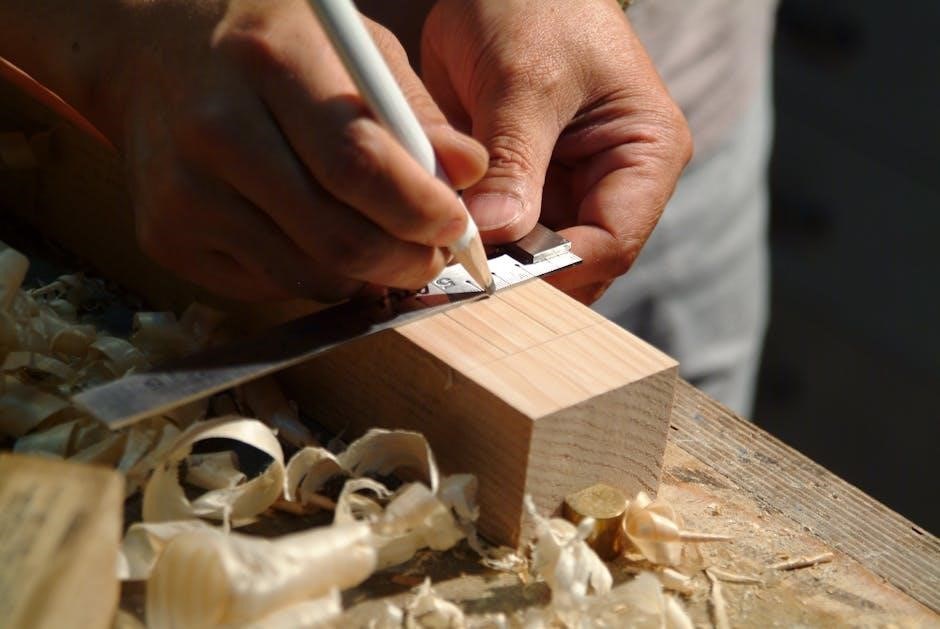
Understanding Roubo Workbench Plans
Roubo workbench plans, often in PDF format, require careful study of detailed diagrams and construction notes for successful building, referencing sources like Benchcrafted.
Key Features of Split-Top Roubo Benches
Split-top Roubo benches represent a significant evolution of the traditional design, offering unparalleled versatility for woodworking. PDF plans from Benchcrafted and The Wood Whisperer Guild highlight this key feature. The split-top allows for integrated clamping cauls, effectively transforming the bench into a vice for holding workpieces securely.
This design facilitates easier work on larger panels and assemblies. Hardware considerations, detailed in these plans, are crucial for smooth operation and durability. Adjustments are often necessary to ensure a flush, stable top. The split-top mechanism requires precise implementation, and PDF guides provide step-by-step instructions for constructing this essential element. Ultimately, the split-top enhances the bench’s functionality, making it a central hub for various woodworking tasks.
Benchcrafted vs. Wood Whisperer Guild Plans
When exploring Roubo workbench plans PDF options, woodworkers often compare Benchcrafted and The Wood Whisperer Guild offerings. Benchcrafted’s plans, based on German cabinetmaker’s benches, are known for their detailed construction notes and techniques. The Wood Whisperer Guild’s plans are similar but feature subtle differences, making direct comparison valuable.
It’s cautioned against using both sets simultaneously due to potential discrepancies in dimensions. The Guild’s package includes paper plans alongside digital resources. Both sources provide comprehensive guidance, but Benchcrafted’s focus leans towards traditional methods, while the Guild’s may incorporate modern adaptations. Choosing between them depends on individual preferences and desired build style, both are excellent PDF resources.
Essential Elements in Roubo Workbench Plans
Comprehensive Roubo workbench plans PDF documents invariably include detailed timber lists specifying board footage and dimensions for legs, top, and stretchers. Crucially, they feature precise joinery details – typically mortise and tenon – with accompanying diagrams. Plans also outline the split-top mechanism, including hardware requirements and adjustment procedures.
Essential elements extend to dog hole layouts, vise mounting instructions, and considerations for tool wells or storage. Good plans will address wood selection, recommending species like red oak for affordability and durability. Furthermore, they’ll cover bench height optimization for ergonomic working. Finally, clear labeling and a bill of materials are vital for successful PDF-guided construction.

Materials and Tools Required
Roubo workbench plans necessitate substantial lumber – often red oak – alongside hand tools like saws and chisels, or power tools for faster fabrication.
Wood Selection for Roubo Construction (Red Oak, etc.)
Roubo workbench plans frequently recommend hardwoods for their strength and durability. Red oak is a popular and relatively affordable choice, particularly when sourcing “wet” lumber as detailed in resources like Lost Art Press’s guides. This allows for easier shaping while green, minimizing splitting.
However, other hardwoods like maple, beech, or ash can also be utilized, offering varying degrees of hardness and grain patterns. The key is selecting timber that is straight-grained and free from significant defects.
Consider the weight of the wood; a fully constructed Roubo is substantial. Plan dimensions from PDF plans will dictate the board footage needed, and understanding wood movement is crucial for a stable, long-lasting bench.
Essential Hand Tools for Roubo Building
Successfully executing Roubo workbench plans relies heavily on a well-equipped hand tool collection. A robust set of chisels, essential for joinery and refining timber, is paramount. Planes – specifically jack, jointer, and smoothing planes – are crucial for flattening and squaring stock.
Saws, including a tenon saw and a crosscut saw, are needed for precise cuts. Measuring and marking tools like marking gauges, squares, and a good quality ruler are indispensable for accuracy.
Furthermore, mallets, hand drills, and various clamps will be frequently used throughout the build process. Many PDF plans assume a degree of hand tool proficiency, emphasizing traditional woodworking techniques.
Power Tools for Expedited Construction
While Roubo workbench plans can be executed entirely with hand tools, power tools significantly expedite the process. A bandsaw is invaluable for efficiently rough-cutting timber to size, reducing the workload for hand saws. A jointer and planer dramatically speed up the flattening and squaring of boards.
Drills, particularly a drill press, are useful for creating precise dog holes. Sanders, like a belt or orbital sander, streamline surface preparation.
However, even with power tools, a degree of hand tool work remains essential for achieving the precision and quality inherent in a traditional Roubo. Many PDF plans acknowledge this balance, suggesting power tool assistance where appropriate.

Construction Stages: A Detailed Breakdown
Roubo workbench plans PDF guides typically begin with timber preparation, followed by leg construction, and culminating in the complex assembly of the workbench top.
Preparing the Timber for the Workbench
Roubo workbench plans PDF emphasize meticulous timber preparation as foundational to a stable and durable build. Often, plans advocate for using green or wet red oak, as detailed by Lost Art Press, allowing for easier shaping with hand tools.
This involves careful selection, milling, and jointing of lumber to achieve precise dimensions. Plans detail techniques for flattening boards, establishing square edges, and creating consistent thickness.
The process frequently includes allowing the wood to partially dry during construction, leveraging its weight for clamping during glue-ups.
Proper timber preparation minimizes stress and ensures a solid, long-lasting workbench, directly impacting the final build quality as outlined in various PDF guides.
Building the Roubo Workbench Legs
Roubo workbench plans PDF consistently highlight the legs as critical structural components. Typically, these plans detail constructing robust legs from multiple laminated pieces of timber, enhancing strength and stability.
The lamination process, often using red oak, involves precisely jointing and gluing boards together to form thick leg posts. Detailed diagrams within the PDF guides illustrate mortise and tenon joinery for connecting the legs to the surrounding stretchers and the workbench top.
Precise measurements and accurate cuts are paramount, ensuring squareness and preventing racking.
Many plans emphasize wedged tenons for a mechanical lock, further reinforcing the leg assembly and contributing to the workbench’s overall rigidity, as demonstrated in Benchcrafted’s designs.
Constructing the Roubo Workbench Top
Roubo workbench plans PDF emphasize a massively thick and stable top, traditionally built from laminated hardwood. These plans detail preparing the timber – often red oak – by jointing and planing to achieve perfectly flat surfaces for gluing.
The lamination process, crucial for preventing warping, involves applying substantial clamping pressure during glue-up. Detailed diagrams illustrate the arrangement of boards to maximize strength and minimize visible seams.
Many PDF guides, like those from The Wood Whisperer Guild, specify creating a breadboard end construction to manage wood movement.
Finally, plans outline flattening the assembled top using hand planes or power tools, ensuring a perfectly level work surface for precision woodworking.
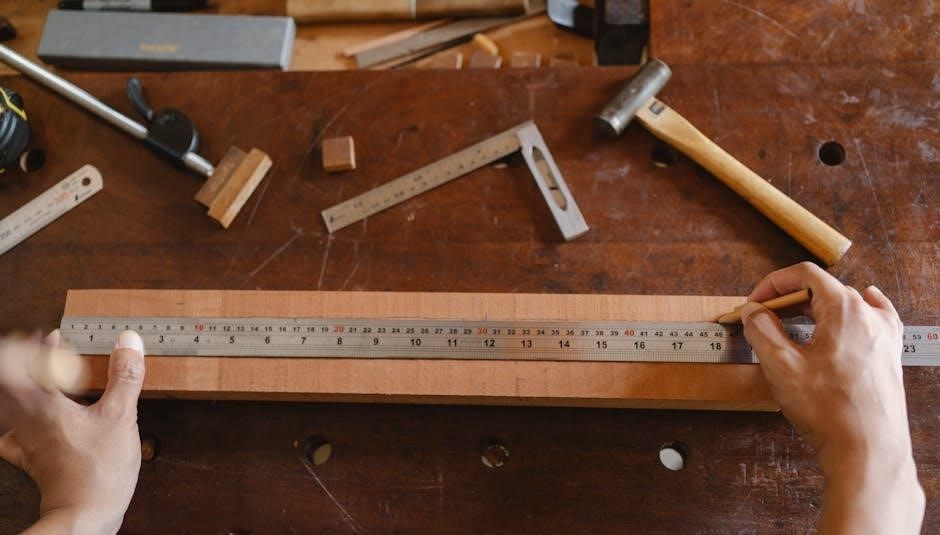
Split-Top Mechanism Details
Roubo workbench plans PDF often feature a split-top, enabling integrated clamping. Benchcrafted plans detail hardware and adjustments for this versatile feature.
Designing and Implementing the Split-Top Feature
Roubo workbench plans PDF frequently emphasize the split-top as a core functionality, offering exceptional versatility for clamping workpieces. The design necessitates careful consideration of the gap between the benchtop sections, ensuring it accommodates various stock thicknesses.
Benchcrafted’s plans provide detailed guidance on creating a robust and smooth-operating split-top mechanism. This involves precise joinery to allow for movement while maintaining stability. The Wood Whisperer Guild’s resources also offer insights, though differences exist between the two sets of plans, advising against using both simultaneously.
Implementation requires accurate cutting and fitting of the benchtop sections, along with the installation of appropriate hardware. The goal is a seamless transition between the two halves, enabling effective clamping without hindering workflow. Careful planning is crucial for a successful outcome.
Hardware Considerations for the Split-Top
Roubo workbench plans PDF detailing the split-top feature invariably address hardware selection. Robust hardware is paramount for smooth operation and longevity. Considerations include the type of fasteners used to connect and separate the benchtop sections, and the mechanism for adjusting and locking the split.
Benchcrafted plans often specify particular hardware components designed for this application, ensuring compatibility and performance. The choice of hardware impacts the ease of adjusting the gap width, crucial for accommodating diverse woodworking tasks.
Quality hinges and locking mechanisms are essential to prevent unwanted movement during use. Careful attention to hardware selection, as outlined in the PDF plans, contributes significantly to the overall stability and functionality of the split-top Roubo workbench.
Adjustments and Refinements of the Split-Top
Roubo workbench plans PDF resources emphasize that the split-top isn’t a “set it and forget it” feature. Fine-tuning is crucial for optimal performance. Initial adjustments involve ensuring the two benchtop sections are perfectly level with each other when joined.
The plans will detail methods for adjusting the hardware to eliminate any gaps or unevenness. Refinements often include addressing friction in the split mechanism, ensuring smooth opening and closing.
Experienced builders, referencing PDF guides from sources like Benchcrafted, suggest periodic checks and adjustments as the wood expands and contracts with humidity changes. Achieving a seamless and functional split-top requires patience and a willingness to iterate based on practical use.

Additional Features and Accessories
Roubo workbench plans PDF often include options for adding vises, dog holes, and integrated tool storage, enhancing functionality and organization for woodworkers.
Adding Vises to Your Roubo Workbench
Roubo workbench plans PDF frequently detail vise integration, a crucial element for securing workpieces. Traditional options include tail vises and face vises, often requiring careful mortising into the substantial bench legs and top.
Benchcrafted, a prominent source for Roubo plans, offers specific hardware recommendations and installation guidance. Consider the vise’s jaw width and clamping pressure when selecting a model.

Many builders opt for quick-release mechanisms for efficiency. Detailed PDF plans will illustrate proper placement for optimal clamping versatility, accommodating various project sizes and shapes. Accurate mortise dimensions, as outlined in the plans, are vital for smooth vise operation and long-term stability.
Proper vise installation significantly enhances the workbench’s utility.
Dog Holes and Bench Dogs: Functionality and Placement
Roubo workbench plans PDF invariably include detailed instructions for incorporating dog holes – essential for workholding. These holes, drilled perpendicularly through the workbench top, accept bench dogs, providing secure clamping points when used with holdfasts or other work-holding accessories.
PDF plans will specify precise spacing and diameter for dog holes, typically arranged in rows parallel to the bench’s front and sides.
Strategic placement, as illustrated in the plans, maximizes versatility for various woodworking tasks. Bench dogs come in different styles; flush-mounted dogs offer a clean surface when not in use. Accurate drilling, guided by the plans, ensures a snug fit and prevents dog wobble, crucial for stable workholding.
Proper dog hole layout enhances the workbench’s clamping capabilities.
Tool Storage Solutions Integrated into the Roubo Design
Roubo workbench plans PDF often showcase ingenious tool storage integrated directly into the bench’s structure. Traditional Roubo designs prioritize accessibility and organization, featuring dovetailed trays and compartments beneath the workbench top.
Detailed PDF plans illustrate the construction of these storage areas, specifying dimensions and joinery techniques. Some plans incorporate tool wells – recessed areas for frequently used tools – along the front edge of the bench.
Furthermore, many Roubo plans include provisions for adding tool racks to the legs, maximizing vertical storage space. The PDF guides emphasize efficient use of space, allowing woodworkers to keep essential tools readily at hand. Customization options, detailed in the plans, enable builders to tailor storage to their specific needs.
Effective tool storage is a hallmark of a well-designed Roubo bench.
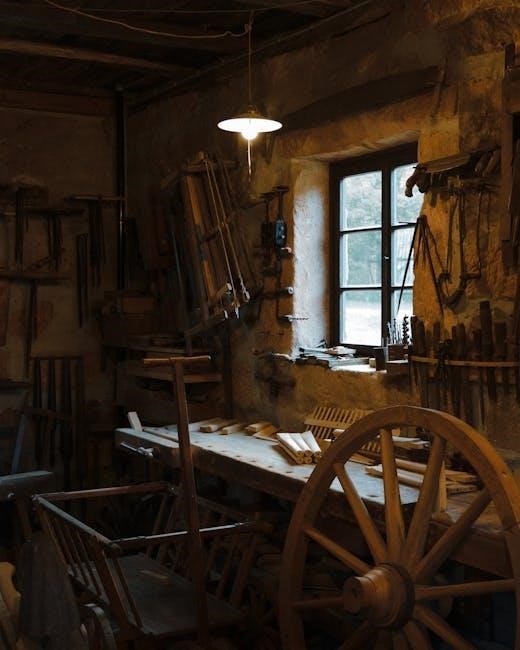
Maintenance and Care
Roubo workbench plans PDF resources emphasize protecting the wood from wear, suggesting regular cleaning and oiling to preserve its longevity and functionality.
Protecting Your Roubo Workbench from Wear and Tear
Roubo workbench plans PDF guides consistently highlight the importance of preventative care. A robust finish, like boiled linseed oil or a durable varnish, is crucial for safeguarding the wood against moisture, spills, and the inevitable impacts of woodworking.
Regularly inspect the benchtop for dents or scratches, addressing them promptly to prevent further damage. Consider using bench cookies or protective mats when working with particularly abrasive materials or tools.
Avoid leaving metal tools directly on the wood surface for extended periods, as they can cause staining. Periodic cleaning with a mild soap solution and re-application of finish will maintain the workbench’s beauty and structural integrity for generations, ensuring it remains a reliable centerpiece of your workshop.
Regular Maintenance Schedule
Roubo workbench plans PDF resources emphasize a consistent maintenance routine. Monthly, inspect all joints for tightness and address any loosening with careful tightening. Quarterly, clean the entire surface with a mild wood cleaner, removing accumulated sawdust and grime.

Twice yearly, apply a fresh coat of oil or wax to the benchtop, replenishing the protective finish. Annually, thoroughly inspect the split-top mechanism (if applicable), lubricating moving parts and checking for wear.
Pay close attention to vises, ensuring smooth operation and lubricating as needed. This proactive schedule, informed by detailed plans, will preserve the workbench’s functionality and longevity, minimizing costly repairs and maximizing its service life.
Repairing Common Issues in Roubo Workbenches
Roubo workbench plans PDF guides often don’t detail repairs, but understanding construction aids troubleshooting. Loose joints are common; re-gluing and clamping, referencing original plans for alignment, is key. A sagging top requires tightening stretchers or reinforcing the undercarriage.
Split-top mechanisms can bind – lubrication and adjustment are first steps. Damaged dog holes can be plugged and redrilled. Cracked wood, though rare with proper care, requires careful gluing and clamping.
Always prioritize structural integrity; consult detailed plans to ensure repairs maintain the bench’s original strength and functionality. Preventative maintenance, as outlined in many PDF resources, minimizes the need for extensive repairs.
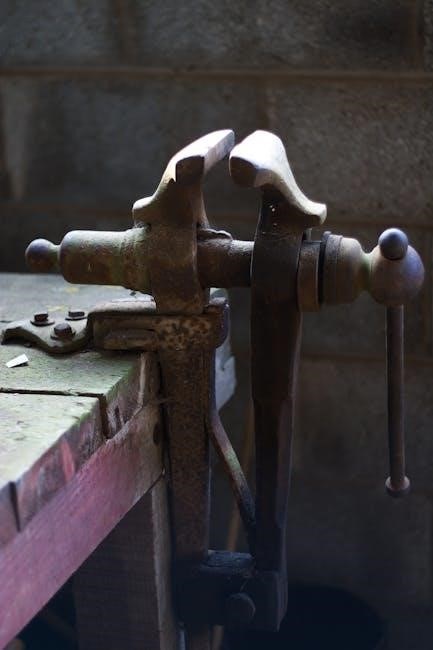
Finding and Utilizing PDF Plans
Roubo workbench plans PDF are sourced from Benchcrafted, The Wood Whisperer Guild, and Lost Art Press, requiring careful interpretation of complex diagrams for successful builds.
Reliable Sources for Roubo Workbench PDF Plans
Benchcrafted stands out as a premier source, offering meticulously detailed PDF plans for their Split-Top Roubo Bench. These plans, often included with their Bench Makers Package, are renowned for their clarity and precision. However, be cautious about mixing them with other sets.
The Wood Whisperer Guild also provides comprehensive Roubo workbench plans, though they acknowledge similarities and slight differences compared to Benchcrafted’s offerings. Their plans are valuable for reference but shouldn’t be used in conjunction with Benchcrafted’s for dimensioning.
Lost Art Press, through publications like “Roubo Workbench: By Hand & Power,” delivers a broader understanding of workbench construction, including plans for various designs, including the Ancient Roubo. These resources emphasize traditional techniques and material selection, offering a deeper dive into the craft.
Always verify the source’s reputation and ensure the PDF plans are complete and legible before commencing your build.
Interpreting Complex Workbench Diagrams
Roubo workbench plans, particularly in PDF format, often present intricate diagrams. Understanding these requires a systematic approach. Begin by identifying the overall assembly and then focus on individual components. Pay close attention to dimensioning – ensure you understand the units (inches or millimeters) and tolerances.
Bill of Materials (BOM) lists are crucial; cross-reference parts in the diagrams with the BOM to confirm quantities and sizes. Joinery details are often shown in exploded views; study these carefully to grasp the construction sequence.
Look for sectional views to understand internal structures and hidden connections. Don’t hesitate to sketch out sections or create 3D models to visualize the assembly. If discrepancies arise, consult online forums or woodworking communities for clarification.
Customizing Plans to Fit Your Needs
While Roubo workbench plans (often PDFs) provide a solid foundation, customization is frequently necessary. Consider your workshop space; adjust the bench’s length, width, and height to suit your needs. Modify tool storage solutions – add drawers, shelves, or dog holes based on your tool collection.
Wood selection offers customization potential. While red oak is common, other hardwoods like maple or beech can be substituted. Adapt the split-top mechanism if you prefer a different configuration or size.
Remember to recalculate material lists and adjust joinery details accordingly. Prioritize structural integrity when making changes. Thorough planning and careful execution are key to a successful, personalized Roubo workbench.