Understanding Trigger Finger
Trigger finger causes finger locking or catching when bending or straightening, commonly affecting the ring finger or thumb.
Gentle stretches, like fingertip bends, and self-care techniques, such as massage, can help relieve pain and improve finger movement.
Consistent exercise is essential for alleviating symptoms and increasing flexibility, potentially utilizing printable trigger finger exercises PDF guides.
What is Trigger Finger?
Trigger finger, also known as stenosing tenosynovitis, is a condition affecting the tendons in the hand and fingers. It occurs when the tendon sheath – the tunnel through which the tendon slides – becomes inflamed and narrowed. This narrowing restricts the tendon’s smooth gliding motion, causing a catching or locking sensation when bending or straightening the affected finger.
The sensation is often described as a ‘snap’ or ‘click’ as the finger moves, and in severe cases, the finger may become locked in a bent position, requiring manual straightening. While any finger can be affected, it’s most common in the ring finger and thumb. Understanding this mechanism is crucial when considering printable trigger finger exercises PDF resources, as the exercises aim to restore smooth tendon movement.
These exercises, often detailed in such PDFs, focus on gently stretching and strengthening the affected tendons and surrounding tissues, aiming to reduce inflammation and improve range of motion.
Causes and Risk Factors
The exact cause of trigger finger isn’t always clear, but it’s often linked to repetitive hand motions or forceful gripping. Activities involving prolonged use of tools, playing musical instruments, or frequent typing can contribute to the condition. Certain medical conditions also increase risk, including diabetes, rheumatoid arthritis, and gout. These conditions can cause inflammation and affect tendon health.
Repetitive strain can lead to inflammation of the tendon sheath, narrowing the space for the tendon. Understanding these factors is important when utilizing printable trigger finger exercises PDF guides, as the exercises should be modified based on individual risk factors and the severity of the condition;
Individuals with underlying health issues may need to consult a healthcare professional before starting any exercise program, ensuring the exercises are appropriate and safe.
Symptoms of Trigger Finger
The primary symptom of trigger finger is pain at the base of the affected finger or thumb. This pain often worsens with gripping or bending. A noticeable clicking or popping sensation may occur when moving the finger, as if something is catching. In severe cases, the finger can become locked in a bent position and require manual straightening.
Morning stiffness is also common, and the affected finger may feel sore after periods of inactivity. Recognizing these symptoms is crucial when beginning a program using printable trigger finger exercises PDF resources.
The exercises should be adjusted based on symptom severity; gentle stretches are best for acute pain, while more advanced exercises can be introduced as pain subsides. Consulting a healthcare professional is recommended for persistent or worsening symptoms.

Printable Trigger Finger Exercises
Printable trigger finger exercises PDF guides offer targeted stretches and movements to alleviate symptoms, improve flexibility, and restore pain-free finger function effectively.

Warm-up Exercises
Before diving into core exercises, preparing your hands and fingers with gentle warm-ups is crucial. These exercises increase blood flow, improve flexibility, and reduce the risk of further irritation. Utilizing a printable trigger finger exercises PDF can provide visual guidance for proper form.
Gentle Finger Stretches
Begin with simple finger stretches. Extend your arm forward, palm up, and gently bend each finger backward, holding for a few seconds. Repeat this process several times for each finger. This helps loosen the tendons and prepare them for more demanding movements. A PDF guide can illustrate the correct stretching angles.
Wrist Rotations
Wrist rotations are also beneficial. Slowly rotate your wrists clockwise and counterclockwise, performing 10-15 repetitions in each direction. This improves wrist flexibility, which can indirectly impact finger function. Many printable trigger finger exercises PDF resources include wrist rotation instructions.
These stretches are foundational for warming up the hand before more intensive exercises, improving flexibility and reducing stiffness. A printable trigger finger exercises PDF often begins with these simple movements. Start by extending your arm straight out, palm facing upwards. Gently bend each fingertip backward, creating a slight stretch.
Hold each stretch for approximately 15-20 seconds, focusing on a comfortable range of motion – avoid forcing the stretch. Repeat this bending motion 5-10 times per finger. You can also gently pull each finger towards your body to enhance the stretch. Visual aids within a PDF can demonstrate proper technique.

Remember to listen to your body and stop if you experience any sharp pain. Consistency is key; performing these stretches daily can significantly improve finger mobility.
Wrist rotations are a crucial component of a comprehensive hand exercise routine, often detailed in a printable trigger finger exercises PDF. Begin by extending your arms forward, palms facing down. Gently rotate your wrists in a circular motion, clockwise for 10-15 repetitions, then counter-clockwise for the same amount.
Focus on a smooth, controlled movement, avoiding any jerky or forceful rotations. These exercises help to improve wrist flexibility and range of motion, which can indirectly alleviate tension contributing to trigger finger symptoms. A PDF guide may suggest performing these with a slight bend in the elbows.
Pay attention to any discomfort; modify the range of motion if needed. Combining wrist rotations with finger stretches provides a holistic approach to hand rehabilitation.
Core Exercises for Trigger Finger
Core exercises for trigger finger, often outlined in a printable trigger finger exercises PDF, focus on restoring smooth tendon gliding and improving finger function. These aren’t about abdominal muscles, but the central movements of your hand and fingers. Key exercises include tendon gliding, where you move through a full range of motions – straight, hook, full fist, and tabletop – repeating each 10-15 times.
Fist making and extending strengthens the muscles involved in gripping, while finger extension with assistance (using your other hand to gently pull the affected finger back) improves range of motion. A good PDF will detail proper form to avoid exacerbating the condition.
Consistency is vital; perform these daily for optimal results.
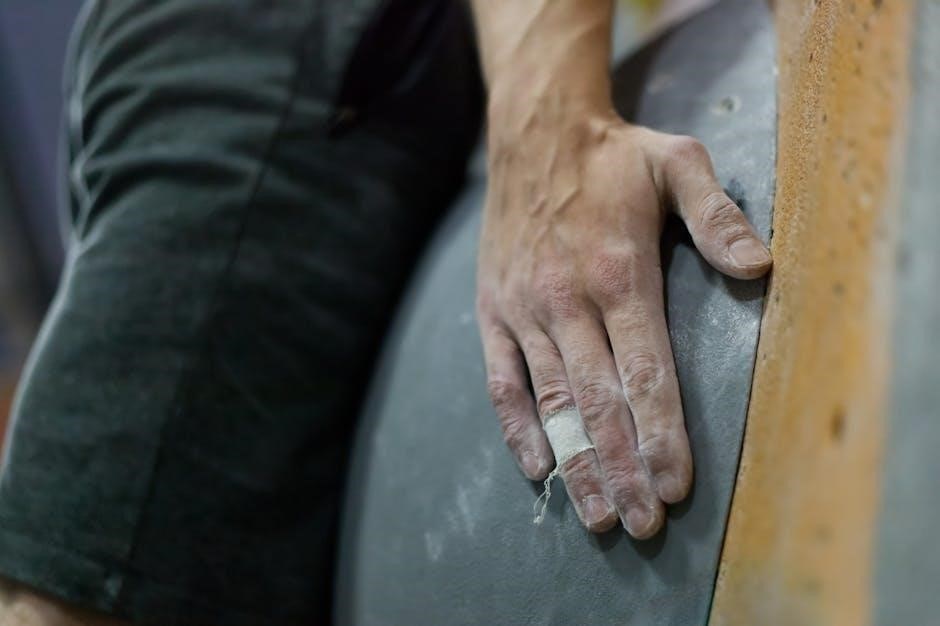
Tendon Gliding Exercises
Tendon gliding exercises, frequently detailed within a printable trigger finger exercises PDF, are foundational for restoring smooth movement of the affected tendon. These exercises involve systematically moving your finger through various positions, mimicking natural hand motions. Begin with your finger straight, then progress to a hooked position, a full fist, and finally a tabletop position (fingertips touching the palm).
Each position should be held briefly, and the sequence repeated 10-15 times, several times a day. A comprehensive PDF guide will illustrate each position clearly. The goal is to gently encourage the tendon to glide freely within its sheath, reducing friction and catching sensations.
Focus on slow, controlled movements, avoiding any sharp pain.
Fist Making and Extending
Fist making and extending, a core component often found in a printable trigger finger exercises PDF, aims to improve range of motion and tendon flexibility. Start with your hand open and flat. Slowly make a gentle fist, ensuring not to squeeze tightly – avoid forcing the movement if resistance is felt.
Then, slowly extend your fingers back to the open position. Repeat this process 10-15 times, several times throughout the day. A well-designed PDF will emphasize the importance of controlled, pain-free movements. This exercise helps to lubricate the tendon sheath and prevent stiffness.
Pay attention to any discomfort and modify the exercise accordingly, perhaps reducing the range of motion.
Finger Extension with Assistance
Finger extension with assistance, frequently detailed in a printable trigger finger exercises PDF, is beneficial when full extension is difficult. Gently use your other hand to assist the affected finger in straightening. Avoid forcing the movement; the assistance should be minimal, just enough to overcome resistance.
Hold the extended position for a few seconds, then slowly return to the starting position. Repeat this 10-15 times. A comprehensive PDF guide will likely illustrate proper hand positioning and emphasize the importance of a slow, controlled motion. This exercise targets the restricted tendon and helps regain full range of motion.
Remember to stop if you experience increased pain and consult a healthcare professional.
Advanced Exercises
Advanced exercises, often found within a detailed printable trigger finger exercises PDF, build upon foundational movements. These typically include active and passive range of motion drills, designed to further improve flexibility and reduce tendon constriction. Progress to these only after comfortably performing core exercises without increased pain.
Active range of motion involves self-directed movements, while passive utilizes external assistance. A good PDF resource will demonstrate proper form to prevent injury. These exercises aim to restore complete finger function and address underlying stiffness. Consistency is key; however, listen to your body and avoid pushing through significant discomfort.
Remember to consult a healthcare professional before starting advanced exercises.
Active Range of Motion Exercises
Active range of motion exercises, detailed in a comprehensive printable trigger finger exercises PDF, empower you to move your affected finger independently through its full arc. Begin by slowly and deliberately bending and straightening each joint – the knuckle, middle joint, and fingertip – as far as comfortably possible.
Repeat this motion multiple times, focusing on smooth, controlled movements rather than speed. These exercises strengthen the muscles surrounding the tendon and improve joint lubrication. A quality PDF guide will illustrate correct technique and suggest appropriate repetition counts.
Pay attention to any pain signals and modify the exercise accordingly. Gradual progression is vital for optimal results.
Passive Range of Motion Exercises
Passive range of motion exercises, often illustrated within a detailed printable trigger finger exercises PDF, involve using your other hand to gently guide the affected finger through its range of motion. This is particularly helpful if active movement is limited due to pain or stiffness.
Carefully bend and straighten the finger, applying only enough force to feel a gentle stretch – never push beyond the point of discomfort. Hold each stretch for a few seconds, then slowly return to the starting position. A well-designed PDF will demonstrate proper hand positioning and emphasize gentle, controlled movements.
These exercises help maintain joint flexibility and prevent further stiffness, complementing active exercises for comprehensive rehabilitation.
Stretching Techniques
Effective stretching is a cornerstone of trigger finger recovery, often detailed within a comprehensive printable trigger finger exercises PDF. Two primary stretches target the affected tendons and improve flexibility.

The Palm Facing Up Stretch involves placing your forearm on a table, palm up, and gently bending the affected finger backward with your other hand. The Palm Facing Down Stretch mirrors this, with your palm facing down. Hold each stretch for 15-30 seconds, repeating several times.
A quality PDF guide will illustrate correct form and emphasize slow, controlled movements. These stretches aim to lengthen the tendons and reduce constriction within the tendon sheath, alleviating locking and pain. Consistency is key for optimal results.
Palm Facing Up Stretch
The Palm Facing Up Stretch is a foundational exercise often included in a printable trigger finger exercises PDF, designed to gently extend the affected finger and improve tendon gliding. Begin by resting your forearm on a flat surface, palm facing upwards.

Using your other hand, carefully bend the affected finger backward towards your wrist. You should feel a gentle stretch along the palm side of your hand and finger. Avoid forcing the movement; it should not cause sharp pain;
Hold this position for 15-30 seconds, focusing on deep, even breaths. Repeat this stretch 3-5 times, several times a day, as outlined in your PDF guide. Proper form, as demonstrated in the PDF, is crucial for effectiveness.
Palm Facing Down Stretch
The Palm Facing Down Stretch, frequently detailed in a printable trigger finger exercises PDF, complements the palm-up stretch by targeting different parts of the tendons. Start by placing your forearm on a table, palm facing downwards.
Gently bend your affected finger downwards towards the table, using your other hand to assist if needed. You should feel a stretch along the back of your hand and finger. Again, avoid any forceful movements or sharp pain – the stretch should be mild and comfortable.
Maintain this position for 15-30 seconds, concentrating on controlled breathing. Repeat the stretch 3-5 times, multiple times daily, following the instructions within your PDF resource. Consistent application, guided by the PDF’s illustrations, maximizes benefits.
Self-Massage Techniques
Self-massage, often illustrated in a printable trigger finger exercises PDF, is a valuable adjunct to stretching, helping to loosen the tendons and surrounding tissues. Begin by warming your hands. Use your unaffected hand to gently massage the palm of your affected hand, focusing on the base of the affected finger.
Apply moderate pressure, using circular motions. Pay particular attention to any tender spots or nodules you feel. Then, gently massage along the length of the affected finger, from the base to the tip. A PDF guide will demonstrate proper technique;
Repeat this process for 2-3 minutes, several times a day. Remember, massage should not be painful; adjust the pressure accordingly. Consistent self-massage, as outlined in your PDF, can significantly improve flexibility and reduce discomfort;
Massage Along the Palm
As detailed in many printable trigger finger exercises PDF guides, massaging along the palm is crucial for releasing tension affecting the finger tendons. Begin by gently warming your hand. Using the thumb of your unaffected hand, apply circular motions to the palm of your affected hand.
Focus particularly on the area at the base of the affected finger, where the tendon often becomes inflamed. Apply moderate, but not painful, pressure. You may feel tender nodules – these are areas requiring extra attention. A PDF will visually demonstrate correct placement.
Continue massaging for approximately one to two minutes. This technique helps improve blood flow and loosen the constricted tendon sheath. Repeat several times daily, following the instructions in your chosen PDF resource for optimal results.
Massage on Affected Finger
Many printable trigger finger exercises PDF resources emphasize direct massage on the affected finger itself. Gently hold the finger with your unaffected hand. Using your thumb and index finger, apply small, circular motions along the entire length of the affected digit, starting from the fingertip and moving towards the palm.
Pay close attention to any tender spots or nodules felt along the finger. These areas indicate inflammation and constriction. Apply gentle, sustained pressure to these points for several seconds. A PDF guide will illustrate proper technique.
Continue massaging for one to two minutes, ensuring a comfortable, not painful, experience. This direct massage helps to loosen the tendon and reduce inflammation. Repeat this exercise several times a day, as recommended in your chosen PDF exercise plan.

Important Considerations
Printable trigger finger exercises PDF plans require consistent, frequent application for optimal results. Manage pain during exercises and seek professional guidance when needed.
Frequency and Consistency
Printable trigger finger exercises PDF guides emphasize that achieving noticeable improvement hinges on consistent practice. Sporadic attempts will likely yield minimal benefits; dedication is key. Aim to perform the exercises at least two to three times daily, dedicating approximately 10-15 minutes per session.
Integrating these exercises into your daily routine – perhaps during morning coffee or before bedtime – can help solidify the habit. Remember, the goal isn’t to push through intense pain, but rather to gently encourage mobility and reduce inflammation. Consistency over time is far more valuable than occasional, strenuous workouts.
Utilizing a printable trigger finger exercises PDF allows for easy tracking of your progress and serves as a visual reminder to maintain your commitment. Don’t be discouraged by slow progress; persistent effort will ultimately lead to improved finger function and reduced discomfort.
Pain Management During Exercises
When utilizing a printable trigger finger exercises PDF, mindful pain management is crucial. A slight stretching sensation is acceptable, but sharp or escalating pain signals a need to immediately modify or stop the exercise. Avoid pushing through significant discomfort, as this could exacerbate inflammation and worsen your condition.
Applying gentle warmth – such as a warm compress or soaking your hand in warm water – before exercising can help prepare the tendons and muscles, potentially reducing pain. Conversely, applying ice after exercise can minimize any residual inflammation.
Listen attentively to your body; some days will be better than others. Adjust the intensity and duration of exercises based on your current pain levels. A printable trigger finger exercises PDF should offer modifications for varying levels of discomfort, allowing for a personalized approach to rehabilitation.
When to Seek Professional Help
While a printable trigger finger exercises PDF can be a valuable self-management tool, professional medical advice is essential in certain situations. If your symptoms are severe, significantly impacting daily activities, or don’t improve after several weeks of consistent exercise, consult a doctor or hand therapist.
Seek immediate medical attention if you experience sudden, intense pain, swelling, redness, or warmth around the affected joint. These could indicate an infection or a more serious underlying condition; A healthcare professional can accurately diagnose the cause of your pain and recommend appropriate treatment.
They may suggest alternative therapies like steroid injections, splinting, or, in severe cases, surgery. A printable trigger finger exercises PDF should supplement, not replace, professional medical care when necessary.
Printable PDF Resources
Numerous online resources offer printable trigger finger exercises PDF guides, providing a convenient way to follow a structured exercise plan. However, discerning reliable sources is crucial. Look for PDFs created by qualified healthcare professionals – physical therapists, occupational therapists, or hand surgeons – or reputable medical institutions.

A good PDF exercise plan will clearly illustrate each exercise with detailed instructions and images. It should also outline the recommended frequency, repetitions, and sets. Beware of generic guides lacking specific guidance or those promoting unproven treatments. Prioritize resources that emphasize gradual progression and listening to your body.
Always consult your doctor before starting any new exercise program, even with a printable trigger finger exercises PDF, to ensure it’s appropriate for your specific condition.
Finding Reliable PDF Guides
Locating trustworthy printable trigger finger exercises PDF resources requires careful consideration. Begin your search on websites of established medical organizations, such as the American Society of Hand Surgeons or the American Academy of Orthopaedic Surgeons. University hospital websites often provide patient education materials, including exercise guides.
Utilize search terms like “trigger finger exercises PDF” combined with “hand therapy” or “occupational therapy” to refine results. Evaluate the source’s credentials – is it authored by a qualified healthcare professional? Look for dates indicating recent updates, ensuring the information is current.
Be cautious of blogs or forums offering exercise plans without clear medical backing. Prioritize PDFs that emphasize safe and gradual progression, and always consult your physician before starting any new regimen.
What to Look for in a PDF Exercise Plan

A comprehensive printable trigger finger exercises PDF plan should include a warm-up section, preparing muscles for movement. Core exercises, like tendon gliding and gentle fist exercises, are crucial for restoring finger function. Look for clear illustrations or videos demonstrating proper form to prevent injury.
The plan should progress gradually, starting with easier exercises and increasing intensity over time. Stretching techniques, such as palm-up and palm-down stretches, should be included to improve flexibility. A good PDF will also address pain management, advising modifications if discomfort arises.
Finally, ensure the plan emphasizes consistency and frequency. It should clearly state how often to perform the exercises for optimal results, and encourage regular practice.